

why you should(n't) smoke
on the body, sobriety, and the difference between rituals and anesthesia


“Don’t smoke, don’t chew, and don’t go with girls that do.”
That was the mantra of this old guy at the local baptist church.
And in the 90s, growing up, there were all these commercials about not being a sucker. That smoking stinks!
One of them had this kid walking from the fridge to his kitchen table, and he pours antifreeze over his cereal, and he says:
“You think this is stupid? There’s something like 4,000 different chemicals in cigarettes. And at least 50 of them give you cancer.”
Then he takes a big bite of his breakfast-o’s and says:
“Well, at least this is only a few chemicals.”
And then you had ads like this :
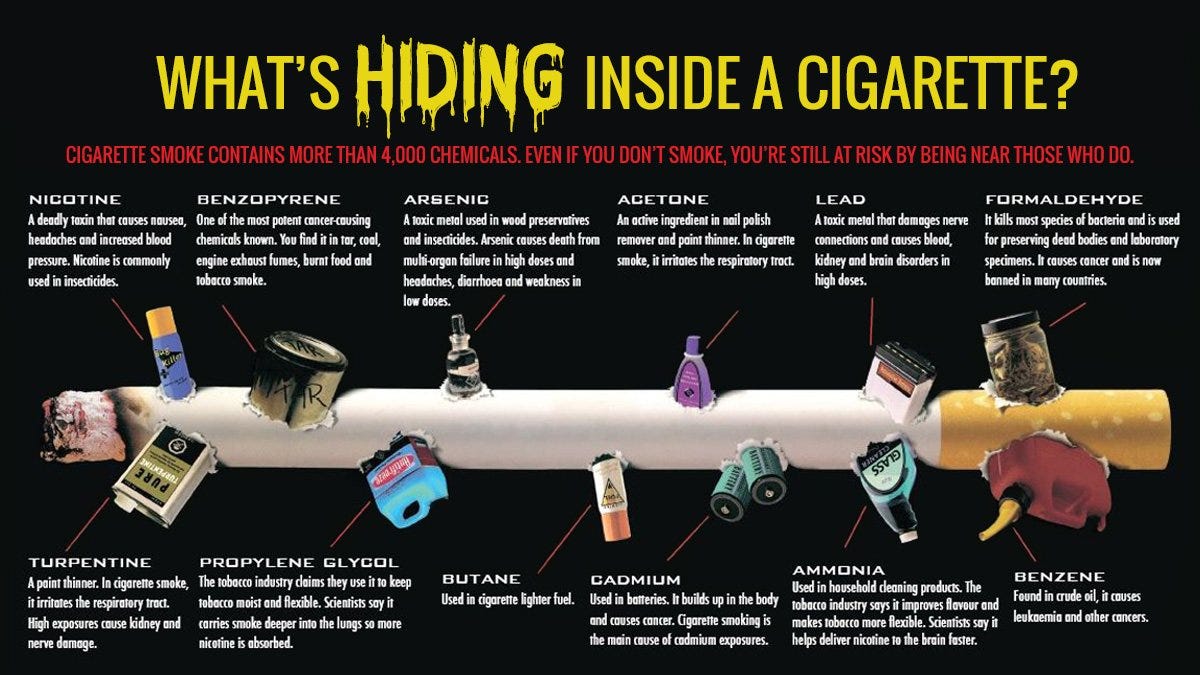
And in grade school we had to draw a bunch of anti-smoking ads ourselves, part of the art curriculum. I drew one where the cigarette was a smoking gun.
Needless to say, the odds of ever enjoying smoking were stacked against me.
But then there was this ad:
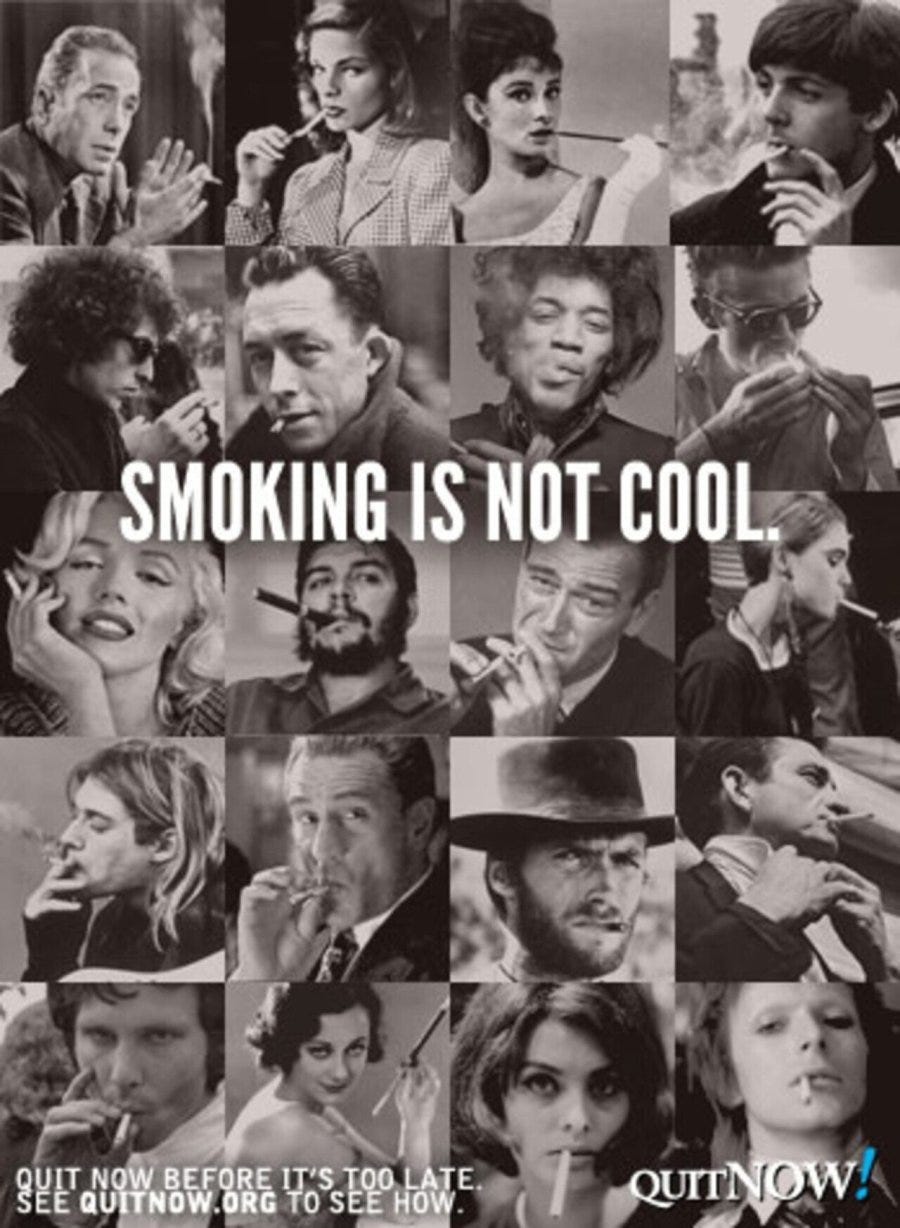
I remember seeing it young, but its purpose seems a bit murky.
Apparently, lots of big tobacco companies fund the anti-smoking campaigns. They get tax rebates for educating smokers. And they can make a message mixed just enough to work both ways.
You put Dylan, Camus, Cash, Hendrix, and a long list of other legends together, these mythic archetypes of rebellion and smoke, and, well, like I said, it works both ways.
This kills you.
This sets you free.
It was probably inevitable that I would try to follow in their footsteps. The smoke, I mean. Not the legend.
And if this essay is going to be the one-stop-shop for all the questions I get around my smoking, and maybe all the questions you have around smoking, then it probably makes sense to start out as clear as I can:
Smoking is not inherently sinful and it is not inherently holy.
Smoking is a kind of mirror, a lens, that reveals what we think about the body, desires, and self-control.

At a high level, it’s easy to see that we have culturally selected vices. A set of contemporary virtues and moralizing that, at least to me, seems cut off from any ethical grounding. Something that transcends a modern cultural moment.
Cigarettes are evil. McDonald’s is normal.
Pills to alleviate any malady; perfectly fine.
Alcohol? Social pillar.
Marijuana? Generationally split.
TV addiction? Necessary.
And on it goes. Moralizing by trend, not be ends ( telos ).
1. your body is a temple
My first real cigar was with a bunch of Italians.
It was a cruise in the Toronto harbour, a benefactor event for a homeless shelter. Lots of local businesses covered the event, helped with the fundraising. But the whole thing was hosted by a big cigar company.
We sat at this table, me and the Italians, and they ordered $300 bottles of wine, and people came around with platters of cigars for us to choose from.
Fat Dom, and he told me to call him that, suggested some Nicaraguan blend for my first.
“Nice and light,” he says, index finger and thumbs pinched together on both hands, beside his round face. “And follow it up with this:”
And he holds up this big kahuna. “Really good.”
And on the cruise, what Fat Dom says, goes.
After the night, which is a story for a different time, I called a taxi. Laying down in the back seat, spinning like, well, a guy sick from three cigars and four glasses of wine. Sick because I inhaled.
Beginner’s Luck.
A few people from church knew of my whereabouts and texts started to buzz in.
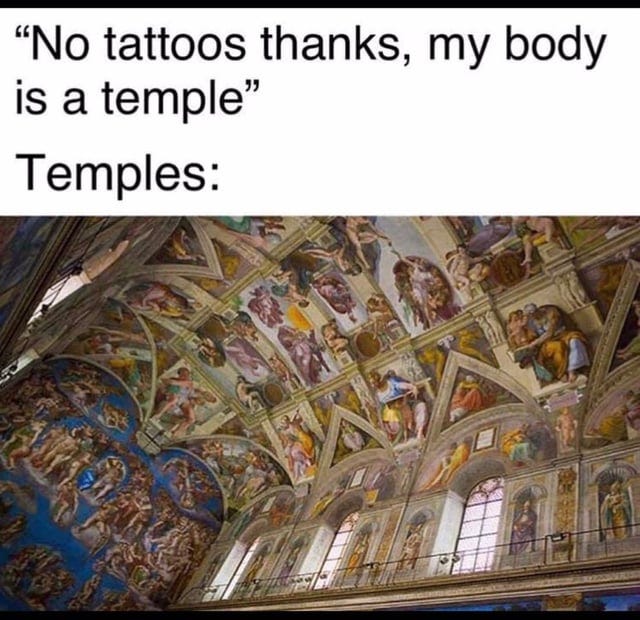
Your body is a temple.
You should take care of yourself.
And for the longest time that verse was used to stop me from doing anything that didn’t fit inside a church.
You wouldn’t tattoo the church, would you?
You wouldn’t drink at church, would you? ( I grew up baptist, so, you know )
You wouldn’t smoke at church, would you?
And the insinuation is, if you wouldn’t do it, there in the pew, with Jesus sitting right beside you, then why would you do it anywhere else?
If you’re a temple of the Holy Spirit, well, turns out He doesn’t much like second hand smoke. Except, you know, all the smokey, burnt offerings. All the incense.
And since then, what hit me about that verse from Corinthians, was the modern, cultural eisegesis. My body, your body, is not a 1980s baptist church.
It is a temple.
Temples are places that God chooses to dwell. God condescends to meet His people. The uncontainable, contained. And in a living communion He shares His life with the body.
From both a biblical and liturgical perspective, temples are not sterile, they are not museums. They are places of smoke and fire and blood, of sacrifice, of movement, of noise. Places of deep dwelling and participation.
In the Old Testament animals are slaughtered and offered. Smoke filled the sanctuary. The people would breathe it in. An embodied experience of the cost of worship.
In the liturgies, incense fills the nave, a symbol of God’s presence and of the prayers of His people.
Temples are places of offering and receiving.
So maybe, when we think of this verse, of God dwelling among us, and of God’s preferences, maybe we should first ground it in this idea of transcendent participation. A kind of communion that finds its source in the Godhead, rather than cultural norms.
What I am driving at here is this big idea that your body is primarily sacramental. Your body is what mediates encounter. Your body makes invisible things, visible.
And that, primarily, is what a temple is.
After that, by my reading, the body is ascetic; it is trained and disciplined towards the Good. That means the body cannot be indulged ( hedonism ) or erased ( gnosticism ).
And so, when it came down to those texts, and my spinning head, the question was a lot less about a particular activity and much more about a heart disposition.
Is my Body directed at the pursuit of participating in the Divine Life ?
2. sobriety is not abstinence
I wasn’t a part of one of those churches that taught Jesus turned water into Welches® Grape Juice. That the first miracle at Cana, was kind of nothing more than adding frozen concentrate to the water purification vessels.
I mean, if it was, I performed the first miracle every summer night in the 90s.
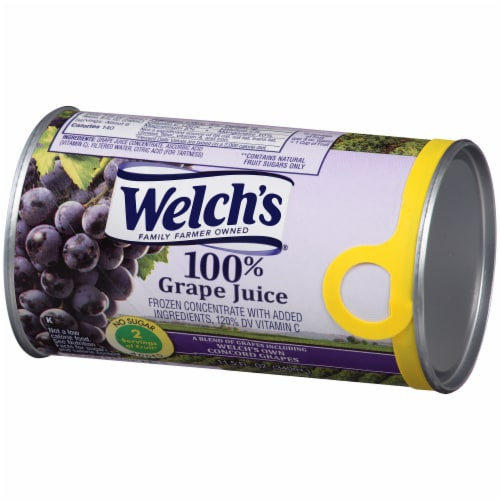
Now, memory isn’t quite serving me, but my churches growing up may have thought that even though Jesus, sure, turned water into wine, He’d never drink it.
“Jesus knew Proverbs. He knew not to look at wine when it is red and sparkling in the glass, when it swirls smoothly. That it bites like a serpent and stings like a viper.”
( c.f. Prov 23:31-32 if you don’t catch the riff )
And that feels like a hard sell. If it’s bad to drink wine, why would Jesus make it for others to drink?
So maybe I was a part of one of those churches that said the wine back then was way more diluted. Maybe an ancient 5% compared to a modern 12%.
But, my brother in Christ, you still have a problem:
You can get wasted on 5% drinks
Hence the biblical prohibitions against drunkenness.
Don’t get drunk on wine.
So maybe I went to one of those churches that taught Jesus was a one-and-done kinda guy. Know the limits and stay far from the line.
And here’s the question that popped into my head at Canada’s ripe old drinking age of 19.
Was Jesus sober after one drink ?
And that question set me on a path to try to figure out what the biblical commands towards sober-mindedness were truly after. Because, and I’m sure you know this, even one drink physiologically affects you, to some extent.
Even if you’re Jesus. Fully God, Fully Man.
Sober-mindedness is about clarity. A clarity of attention and direction.
In the Christian East, sober-mindedness is tied to nepsis. Ideas of watchfulness. It means you’re awake to God and His reality and how you live and move and have your being in His world.
Sobriety itself cannot be merely restricted to a kind of chemical, neurological, physiological balance.
Why?
Because, you’d be sinning with a few hours less sleep one night. In rebellion after a burger. Immoral after having sex.
All of those things affect your natural state of being. Or, in a less nerdy way, they alter how we inhabit the world. That’s why sobriety can’t be so reductionistic.
So.
Maybe, you can lose a few hours of sleep taking care of your kids, and it wakes you up to something. Maybe you can eat a burger and rejoice at a good gift. And maybe, you can have sex, and feel, even for a fleeting moment, some bit of embodied pleasure of the life to come.

Sobriety can’t be defined by some unchanged state of sensations. Your embodied life is always affected by participation.
Sometimes, these things that “intoxicate” us, can sober us up. Clarify our vision. To a life bigger than material and pure physicality. To a life teeming with the infinite.
Rumour has it, and maybe the Good Book has had it written down for a few millennia, but a bottle of wine, and the woman of your dreams, makes for nights you can never forget. It removes a veil. It deepens love.
What I am trying to say is:
There is a kind of intoxication that acts as anesthesia, and there is a kind that acts as a transcendent sobriety.
And the question is:
What are you being sobered to?
A necessary side note : Addiction.
At its most simple, addiction is a counterfeit asceticism. A distorted attempt at discipline and the pursuit of virtue.
Addiction involves a kind of neurological captivity. Patterns in the body form through repetition and reward systems. This alters the brain, calcifying certain preferences, making the range of choices more and more narrow.
In a spiritual sense, addiction reveals disordered loves, failed attempts at discipline, and a twisted sense of finding life via a created substance.
Addiction promises a relief, in the broadest sense. And, as a former alcoholic, it works for a time. Delivering just enough to keep the cycle going. But then, it demands everything from you. Your freedom doesn’t vanish all at once; that’s too easy. It disappears a little bit with every choice. A thousand thousand thousand small steps, right into a prison.
The biblical prohibitions against addiction aim at preserving your freedom. Addiction, both physically and spiritually, impairs your ability to choose the Good.
Healing and freedom come by choosing, time and time again, Life ( often with help, structure, and a bunch of mercy ).
3. neutral goods? do they even exist?
I remember those purity talks in the early 2000s.
The sex is bad until it’s good talks.
Girls heard stuff about not giving yourself away, how no one wants a piece of chewed gum, or an already sharpened pencil. Girls heard that their bodies were dangerous. That marriage was a reward for obedience.
Guys were told their desires were uncontrollable. That they were wild and dangerous. And we were told that once you got married, all those urges, the ones you suppressed or the ones you indulged in, would be healed. And you could let loose.
Sex is bad until it’s good.
“The thing that was once sin, well, now that’s worship.”

And even back then, parts of it didn’t sit square with me. Now I know it’s because that view reduces the Gift into mere permission; into mere act. And as I’ve navigated my own way out of that purity culture, my read on things is :
Sex is always a Good.
Sex is not evil, or neutral, until marriage. It is not dangerous until you flip the switch and magically transform it into reverence.
The main question is,
how do we participate in that Good ?
And you’ll never guess, but the answer to that question is this little thing called: Virtue.
And virtue is essentially about whether, how, and when a person can, or should, do…well, anything.
Sex makes the logic of participatory virtue obvious, but other things follow suit.
Food is also, always, a gift. Given to us, by God, for the sustaining of life. That doesn’t mean that we can’t abuse the gift, turning it into gluttony or escapism.
The same goes for alcohol, which, is a tool of consummating joy and celebration, ( c.f. the Wedding Supper of the Lamb ), but very quickly can be used to numb and erode reality, or as a short cut to false joy.
Then you have to ask:
Are all things Good Gifts ?
No.
Not everything we interact with belongs to that Edenic category of very good. I don’t think screens fit neatly, and I don’t think a pack of cigs get footnoted in, either.
But if you catch the subtext of the above points :
The disposition of your heart, what we are being trained to love, attend to, and depend upon, is of vital importance when it comes to participation.
Which means that these so-called neutral goods — screens, smokes, certain pleasures — have far less to do with the objects themselves and far more to do with who we are, how we engage with them, and why.
It’s easy to try to take this as licence to do anything.
“The objects don’t matter you say ? Well, thanks for the reasonable permission slip to do whatever I want.”
But that’s not what I’m driving at.
I’m trying to do what Jesus did :
You’ve heard it said do not commit adultery, but I tell you, whoever has looked at a woman and lusted has committed adultery in his heart.
Jesus reveals the depth of the law, beyond the superficial, and down to the core of who we are. And I’m trying to do the same kind of move, spotlight the inner person. Highlight the heart in relation to true virtue.
When we engage in good things with a disordered heart, they are no longer good for us. Not one bit.
4. health without idolatry
There’s not a week that goes by without a new batch of guys on TRT swelling up at the gym. You can tell because they were once 125 lbs of twig. And then, with a flick of the wrist and a little injection, well, they’re 185 lbs of log.
Just takes a few months.

And maybe you think that’s fine, maybe you think that’s wrong, I don’t know.
But whatever it is, it’s a frame.
To see the obsession. How is health embraced ? or how it is rejected ?( for example, certain body positivity movements )
Even if you want to plug your ears and eyes to it, health is pushed on you:
supplement ads on every podcast, influencers with their abs and asses out selling some cookie cutter program to a person who wishes that they, too, could have the body of their dreams, in a weekend.
And, to me, lots of the North American church world has sort of taken on this health obsession and sprinkled Jesus on top.
If you’re a Christian, so the conditional goes, then you should be healthy. Perfectly healthy.
“Don’t you know your body is a temple ?”(
And by perfectly healthy, the general meaning is :
What is the culturally accepted standard of health ?
Pills, shots, oils, herbs, substitutes. Carnivore, paleo, keto, fruit-atarian.
The body, and soul, of your dreams with a flick of the wrist; by diet or pharmacological intervention.
And this is why smoking could never be healthy. It’s bad for you. No one defines bad, but what they mean is :
It’s not healthy.
It does not optimize your body. It causes all kinds of health risks.
So here’s my take:
Health is a by-product of Virtue.
It is one of the fruits of pursuing the Good; it is not the goal in and of itself.
You do not pursue health as a way to prove your holiness. You become like Christ, and that means you use all things well. With gratefulness, with wisdom, with self-control. You must steward your body. You must master it. You must teach it to love the Good and reject evil.
These are the objective realities; the call to participate in the Divine Life. A call to mastering the body.
What’s subjective is the fact that each of our bodies are different; we all have different proclivities and weaknesses.
So when you think about stewardship, you have to think about it with wisdom. Yes, you need to participate in the Divine Life. But your how might be different than mine. Because, you know, we’re different. You may, wisely, abstain or enjoy in a glass of wine, a cigar, or, God forbid, a Big Mac.
Having said that.
There are legitimate health concerns with some of these things. All alcohol increases your cancer risk ( someone should tell Jesus before the Wedding Supper of the Lamb ), and smoking does, too. And so does eating hyper processed foods.
So you have to wisely choose, how and when and why and if, you will participate in these “goods”.
What I am trying to say is this :
Risk doesn’t necessarily mean sin. Perfect health doesn’t necessarily mean virtue.
Wise stewardship of your body towards the Good. that’s the goal. And there are things that, wisely, fit in there.
5. differences, rituals, and the soul
The distinctions do matter, if you ask me.
Mass produced cigarettes aren’t the same as premium cigars. Cigarettes do have tons of additives, and those are aimed at addiction. You also inhale cigarettes.
Cigars are pure tobacco. The best ones are all natural and organic. Because the flavour matters. You don’t inhale a cigar; and you enjoy them more slowly. Either communally or in some contemplative way.
This is one reason why I roll my own cigarettes.

It’s part of my answer to the question how do I enjoy these things I love wisely?
I also have a basic ritual.
Before I smoke, every time1, I say a prayer. Thanking God for breath and life and ways to slow down and pray.
Then I focus on the enjoyment. The sizzle sound of paper burning, the aromas, the warm in my mouth, the visible release of breath out into the wind. Here today, gone tomorrow.
If I’m smoking a cigar, I don’t sit and play on my phone, or distract myself away with music or videos or podcasts. I use the time to pray and reflect and think.
If it’s a cigarette or cigarillo, and if I’m by myself, I say the Jesus Prayer.
Inhale life. Exhale death. Prayers rising.
There are definitely times when smoking is a way to escape and take the edge off. And then, by my own standard, if it becomes an anesthesia, then maybe it’s gone too far. Times when it fragments my attention from things that plague me. That haunt my mind.
And then, for now, I’m glad it’s a smoke and not a bottle of bourbon.
And for now, when I smoke, I am prayerful and more grateful.
But that’s because I use it wisely. If there was a time when it threatened my virtue, well, it’d have to go.
Like everything else.
a few questions
This isn’t some big essay to turn you all into me; giving you permission to smoke, or prohibiting you from ever enjoying tobacco.
Here’s what I’d ask if I were you ( and, like I said, honesty matters. Because you can’t hide your heart from God ).
Does this increase my freedom ? Or does this steal it ?
Does this train your attention towards the Good ? Does it sober you up to reality ? or does this replace your attention ? Does it dull reality ?
Are you freely choosing this ? Or are you compelled to do it ?
Can you stop ?
As I am sure you picked up, this isn’t an argument for smoking. It’s about developing a consistent view on sobriety and virtue.
Anyways, that’s it.
My next book meet up is going to be at a park smoking.
see you there ( maybe ).
Every Day Saints is a torchlight searching for the quiet miracles, the beautifully human stories and ideas that exist all around us. And it is a place to dialogue, not Holy Ground, but still a place of gathering.
i mean, mostly
You've threaded a fine line here, but largely successfully. Clearly you've put a lot of thought into it!
The truth is that we are all ultimately answerable to God as individuals, and the pride we can take from aligning with our current culture's definition of 'health' or 'wellness' or 'body image' can be a worse cancer on a spiritual level than the health impacts of certain lifestyle choices.
Thanks for taking the time to explain and open up a tricky topic for consideration and discussion.
Man what an interesting way to wrestle with this idea. I'm sure someone could spin this to be you justifying "bad behavior". But that's not it.
You peel back the black and white. Not to make everything shades of gray but to expose the root.
A lot of our assumptions run deep but they're often tied to roots that aren't all that well tethered.
So we need to string them to a new root, or cut them off.